
Billionaire Bill Ackman buys 70M NIS Tel Aviv apartment, signalling confidence in market amid war
April 3, 2026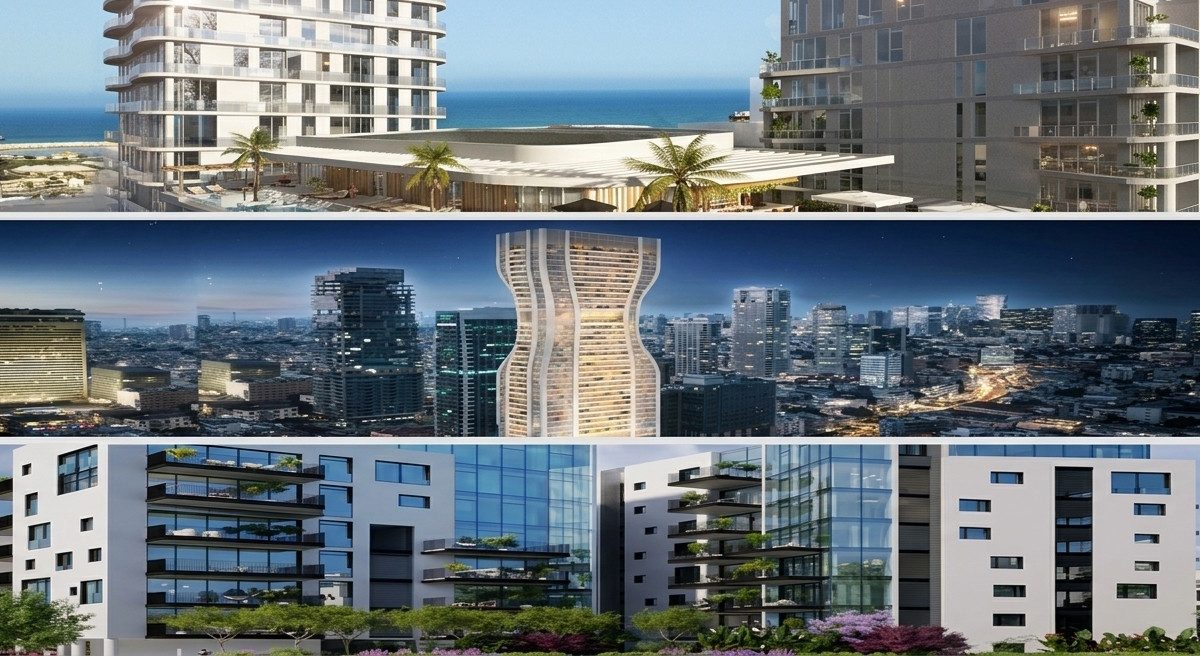
After three years of war, apartment sales figures for projects by publicly traded real-estate companies in Tel Aviv are grim; the market freeze is so deep that developers are willing to pay double brokerage commissions of 2% to sell apartments; new projects are being occupied while many units remain unsold.
A sharp decline, up to a standstill – in apartment sales is occurring in projects currently being built in Tel Aviv by various companies. This picture emerges from a sample review by Calcalist magazine of sales data for eight projects of public real-estate developers in 2025. The check covered several areas of the city and diverse projects, from ultra luxury towers to small urban renewal projects. Even though the rates of decline in sales vary between companies, the trend is the same across the board: a drop relative to 2024, which was already considered an especially weak year for the real-estate sector.
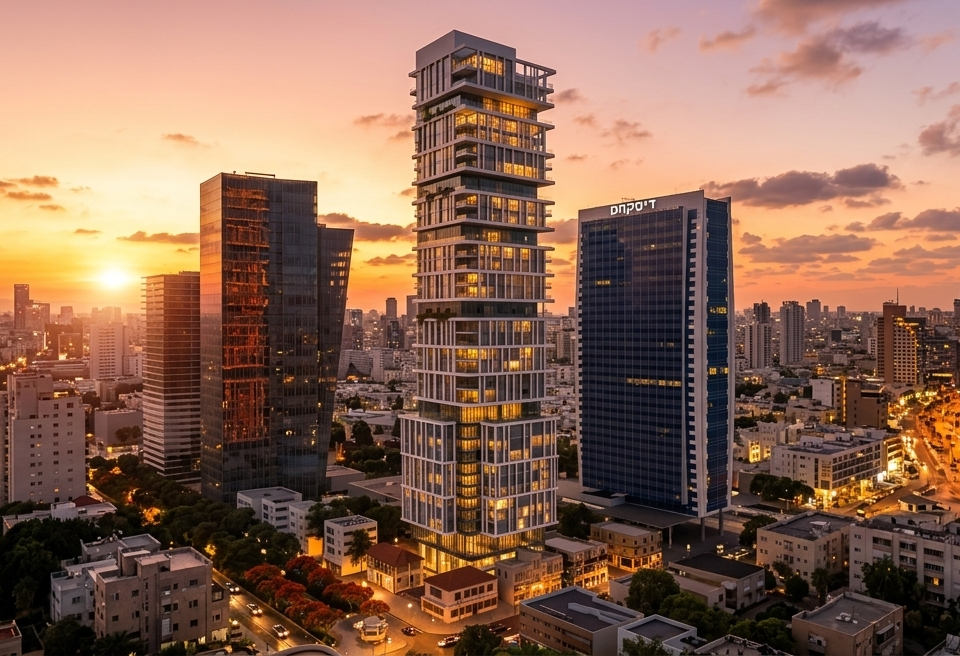
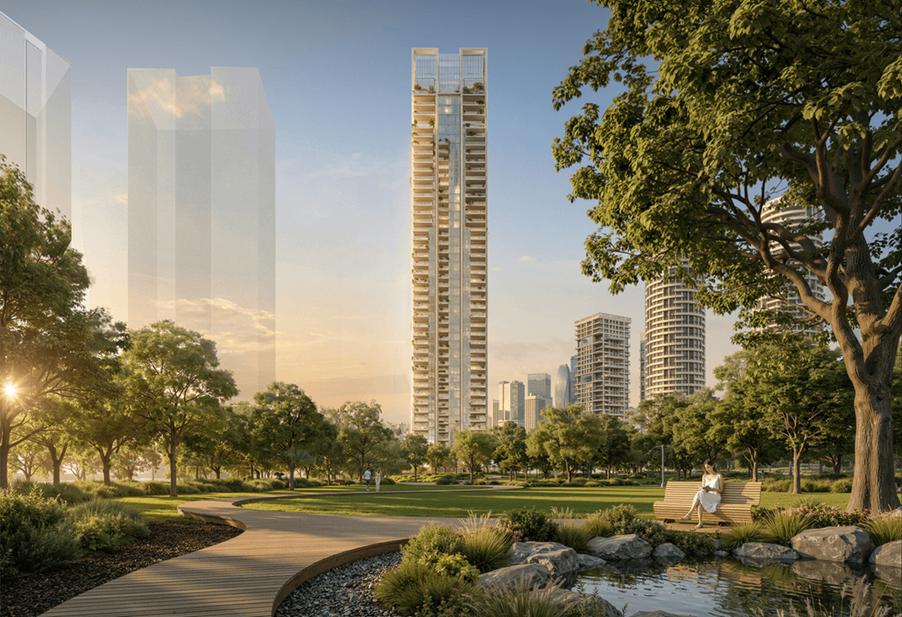
For example, Israel Canada’s ultra luxury SHE project shows unimpressive sales figures. During 2025, only two apartments sold there at 30 million NIS and 32 million NIS. Marketing for the project began in Q4 2024, meaning in more than a year only four apartments have been sold, even though the company is considered an aggressive marketer.
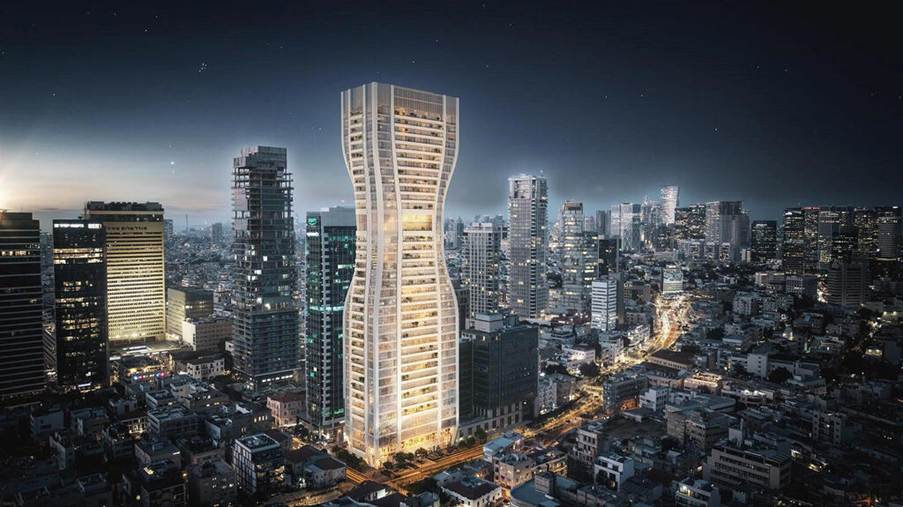
In Africa Israel’s DUO project, which includes 510 apartments, the company did sell 13 apartments in 2025, more than the nine it sold in 2024. But given that the project is due for occupancy in 2027, the overall sales pace should worry the company’s executives, since some 149 apartments remain for sale, about 30% of the total apartments intended for sale in the project.
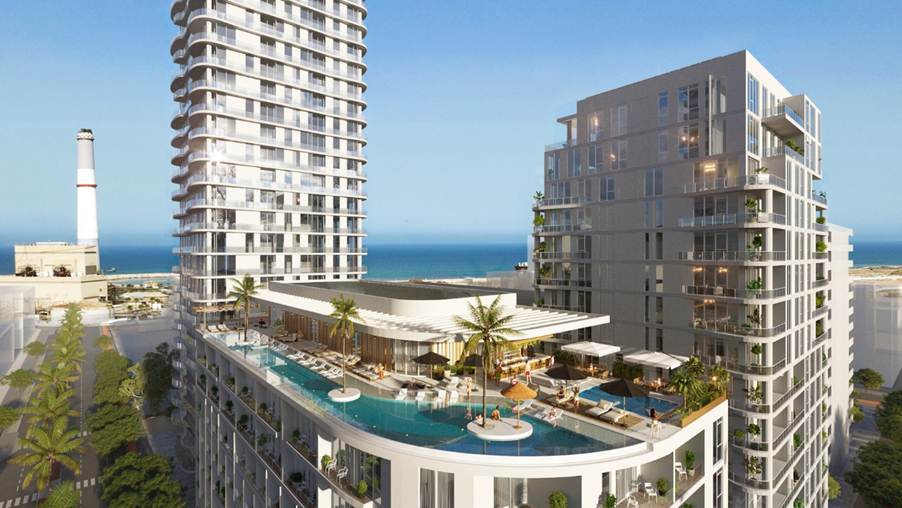
The slowdown can be felt not only in the number of sales but also in price per square meter. For example, Y.H. Dimri, who markets the Yama project in Sde Dov, sold 32 apartments since marketing began about half a year ago, but the average price per square meter fell by 6,000 NIS compared with the price at year-end.
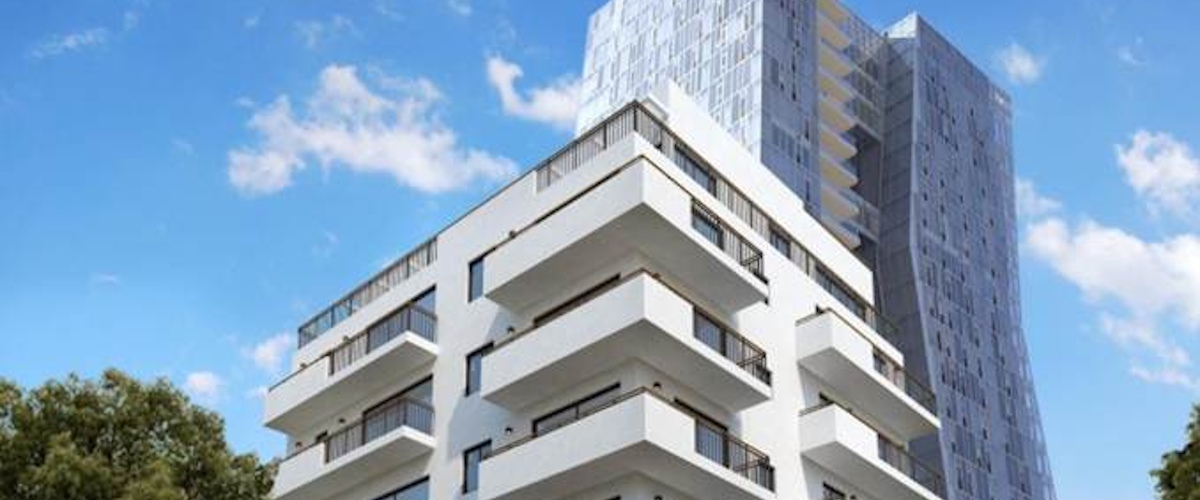
A slowdown is also felt in the prestigious WIZMAN 55 project by Shikun & Binui. During the year only three apartments were sold, in addition to 14 sold up to the end of 2024. The project includes 40 apartments and is expected to be occupied next June, with more than half the apartments unsold. The price per square meter in 2024 was higher by about 10,000 NIS compared with 2025, and stood at 77,500 NIS per sqm.
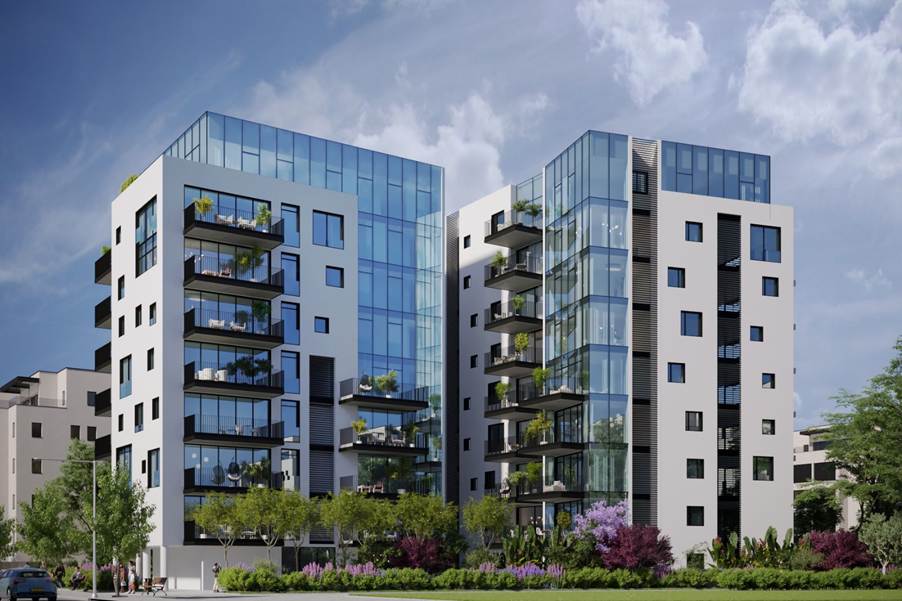
Vitanya, in its project on HaHaresch 55 st., sold 27 apartments over three quarters since marketing began, out of 103 total. A slower pace is seen in Pershkovsky’s luxury HaGaDa project in Bnei Dan, a clearance-and-rebuild of four buildings with 52 new apartments, where one quarter of the apartments have yet to be marketed even though the project is nearing occupancy. In 2023 it sold 21 apartments, in 2024 sales fell to 12, and 2025 ended with only six apartments sold.
Another slow-moving project is Bony HaTichon’s in Bnei Afrim, north Tel Aviv, with 46 units and still 31 unsold apartments. In 2024 10 apartments were sold and in 2025 only 5, 50% drop in sales. The average price per square meter is 50,000 NIS.
Three continuous years of stagnation
The sample review thus reveals a very slow sales pace. In projects whose marketing began several years ago, declines of 50% – 80% in sales volumes are seen compared with 2024. For example, in Hajaj’s Bavli project sales fell by about 70% in a year. Another example that well reflects the sales difficulty is projects due for occupancy within the coming year that still have many apartments unsold, meaning the project will be occupied at less than full capacity.
For instance, in Shikun & Binui’s WIZMAN 55 project, a relatively small project with more than half the apartments unsold even though occupancy is in about a month. Until a few years ago developers could choose the sales pace according to project readiness. Today, developers are willing to sell their entire inventory immediately at market price, and even below it.
In the past two decades, even when there was a freeze in apartment purchases, recovery arrived quickly, within months, usually very strongly. That happened, for example, after the end of the COVID pandemic, when purchases and prices surged. Such temporary freeze scenarios repeated every few years, giving developers confidence. Most believed that, even this time, the hard period was temporary and prices would soon jump upward again. But this time, changes in macro conditions, chiefly the interest-rate hikes that began in 2022 alongside ongoing uncertainty due to the continuing war and rising cost of living, led to the situation we are in now: roughly three continuous years of stagnation.
An extreme example is Africa Israel’s project, where sales rose from nine apartments in 2024 to 13 in 2025. But since the project contains hundreds of units, that change is negligible, in practice it reflects a dramatic standstill for the company.
“Developers are willing to pay double commissions”
The standstill is not unique to Tel Aviv, it is nationwide, but because of the city’s supply, high prices, and sophisticated buyers, it is more noticeable here than elsewhere. High land prices in the core demand area weigh on developers; evidence of this is that many projects located in Tel Aviv are defined in developers’ reports as “very material.” In other words, companies are very pressed to sell apartments in these projects.
A market source who compared the current period to boom periods such as 2022 said that then developers cut brokerage commissions to marketers and brokers who normally worked with them. “Companies raised their noses, felt they no longer needed their services because meetings and deals came easily, so why pay someone to bring buyers?” he said.
But a major change came after October 7. “Developers understood they needed to sell and restored normal commissions of 1%. Since the start of the year, the situation changed again, and developers are willing to pay double commission, i.e. 2% of the apartment price. Some are willing to talk even higher. At the same time, official company price lists have fallen, and that’s before financing incentives of various kinds.”
According to the source, “in parts of the city today there is an abundance of apartments across endless projects in various stages, including projects that are already occupied and still have apartments for sale. This phenomenon didn’t exist 3-4 years ago. The supply is so crazy it confuses buyers. They see a large volume of apartments and some conclude it’s worth waiting for prices to fall further.”
The Treasury’s Chief Economist report for December 2025 translates these feelings into numbers. According to the report, that month saw a spike in the prevalence of financing incentives in Tel Aviv. The share of transactions with financing incentives rose to 37% compared with 26% in November and 33% in December 2024. In this context it should be remembered that all developers are offering such financing incentives today, but as occupancy approaches their ability to offer incentives diminishes, and so selling becomes harder. Yet at least in one project—Damari’s in Sde Dov, what buyers hoped for happened: the price per square meter fell by 6,000 NIS since the end of 2025.
“You can’t argue with the data; it really is a long wave of stoppage,” says Roni Cohen, CEO and partner at Eldar Real-Estate Marketing. “We had several waves of stoppage but what we’re experiencing began with the interest-rate hikes in 2022 and additional parameters were added. Tel Aviv is a luxury market, and usually buyers are people with cash who have many investment alternatives.”
“Sales on paper, eight years ahead”
Cohen says demand hasn’t disappeared, leads arrive, but they do not crystallize into transactions or purchases. “Projects sold today are often on paper, sometimes eight years ahead. You see two segments in the market: investors seeking small apartments, and buyers of luxury assets, penthouses, and so on. In both cases, these are people who usually don’t need to sell their old apartment. What we’re missing is the large segment of housing-upgraders. They find it hard to enter transactions today because they can’t sell their old apartment. The market for 3.5-5 room apartments is suffering most today, and you can see this in Sde Dov,” he says, adding that, out of necessity, developers are trying to wean buyers off financing incentives. “Today the norm is 20/80 combined with a contractor loan, and the remainder is limited. But this costs developers a lot of money, and they can’t provide such unlimited incentives for long. In the end it rolls into the apartment price.”
Nuri Rahamim, owner of the luxury apartment brokerage Rozio Properties in Tel Aviv, says that alongside the drop in sales there are still buyers looking at price ranges reaching tens of millions of shekels. He measures the sector by three parameters: “I work from Florentin to the Yarkon, including new projects, and I measure by the number of leads coming to me, the number of meetings and offers to buy an apartment. Not every lead becomes a meeting, and not every meeting becomes a deal, but in each parameter, I count there is an increase.”
According to Rahamim, in 2026 “the trend of awakening in real-estate transactions among people looking for apartments around 15 million NIS continued, and May began particularly strong. In the first five days of the current month, I received the number of leads equivalent to a full month.”
The content of this article is designed to provide the reader with general information and not to serve as legal or other professional advice for a particular transaction